Sunday, 30 June 2013

MT KINABALU


MOUNT KINABALU

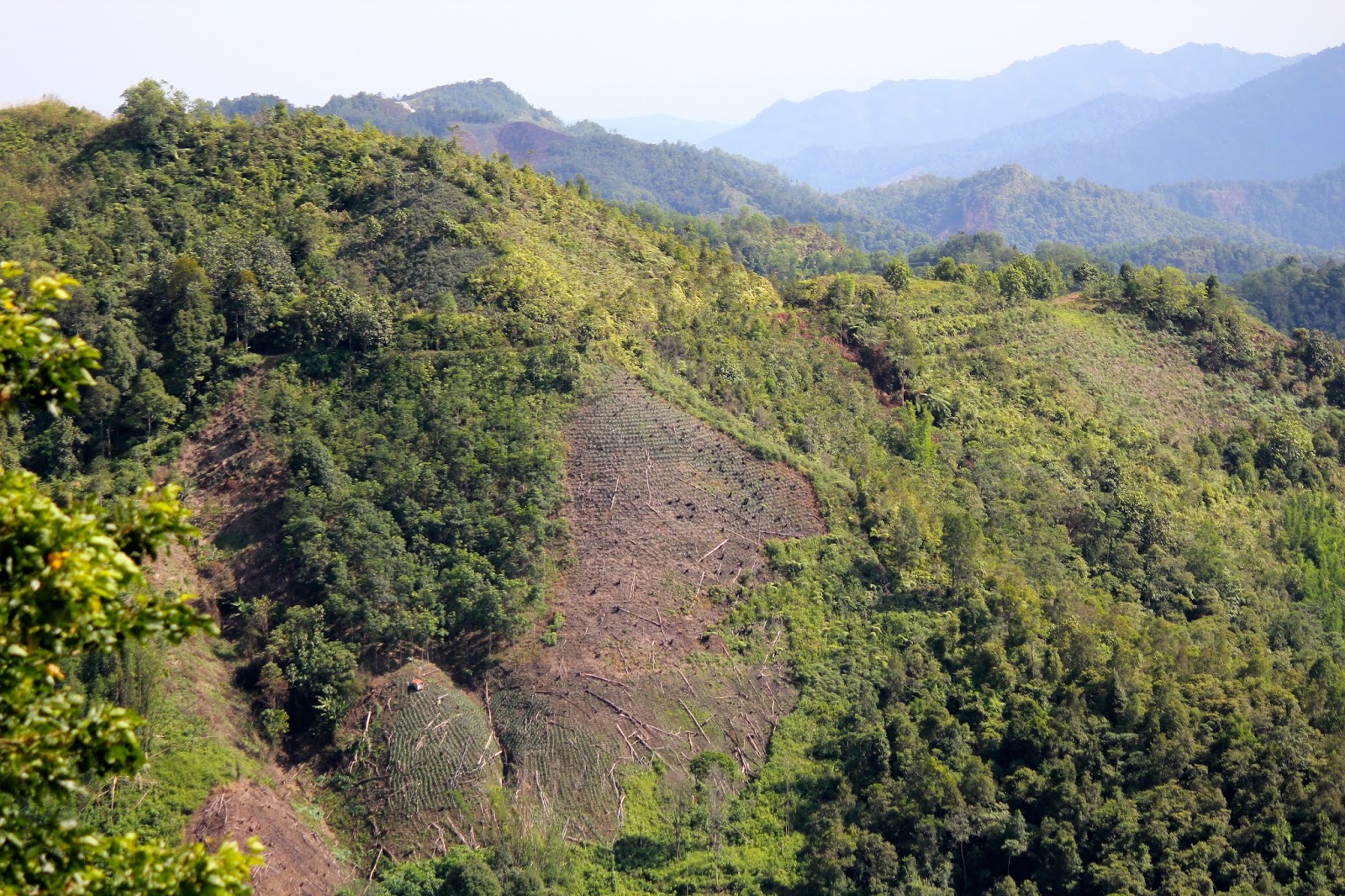
We drove up and up through the Crocker Ranges for about an hour with our ears popping. We passed terraced mountain sides with temperate (not tropical and not too cold) vegetables & fruit, and also patches of logging. 


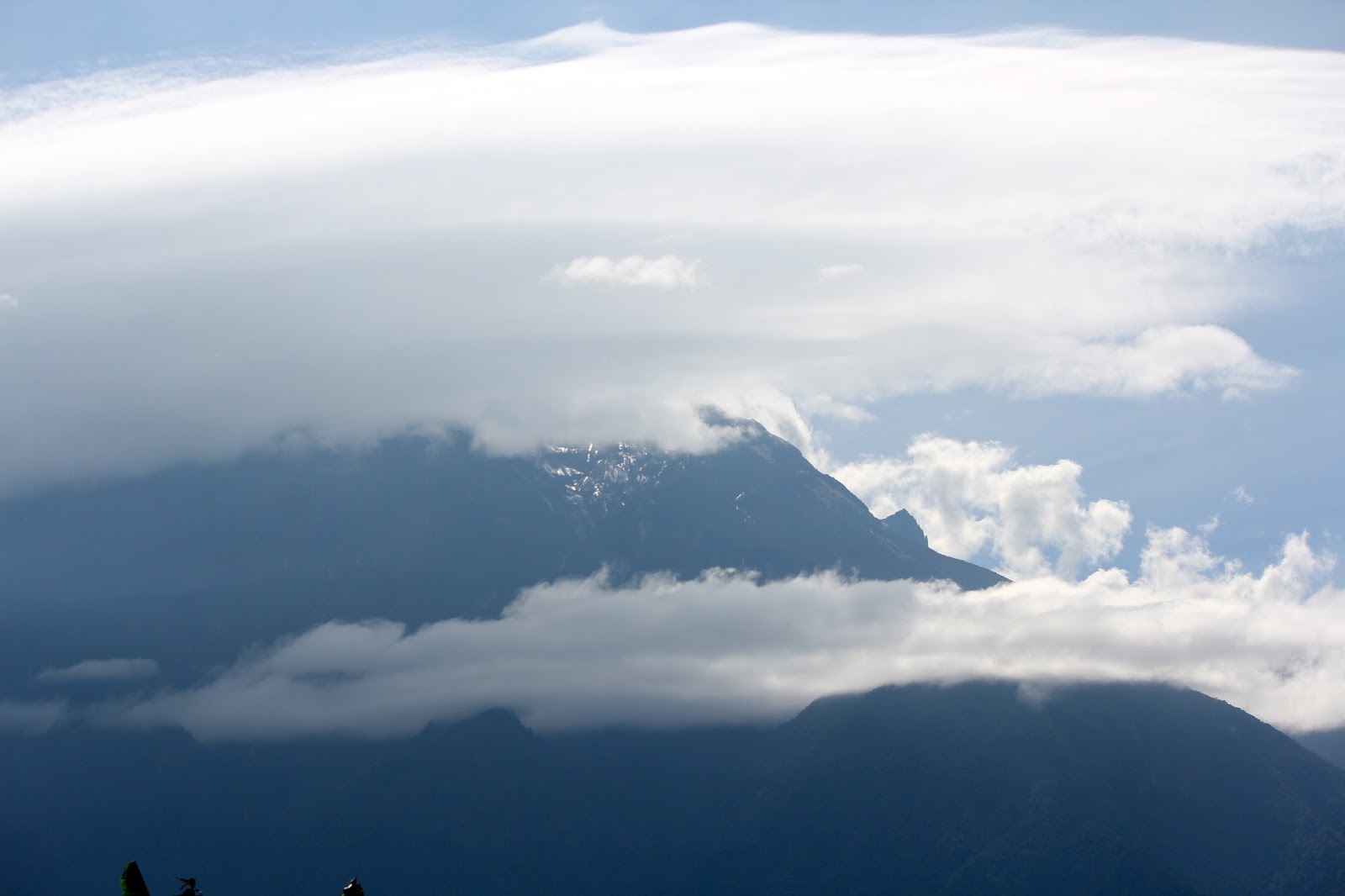
I saw Mt Kinabalu in the distance not long after we left KK. (BTW, thanks Susie for telling me KK is also known as Api-Api), it was big then but by the time we got to its foothills it was enormous. 


It’s almost 5000m above sea level and is the biggest mountain in SE Asia, and it looked like it was trying to keep up with the fashion because it had different layers of cloud wrapping it, you know..... the layer look! The traditional belief is that Mt Kinabalu is where the souls of their ancestors dwell. 


Sabah is known as “the land below the winds” because it is below the latitude where there are cyclones and monsoons. I worked out that is is about 7 degrees north of the equator which is usually hot, but today Mum and I were wearing our jumpers because we are at an altitude of 1500 meters.


Saturday, 29 June 2013

MASS TOURISM, SNORKELING & CASTAWAY!

Forgot to add this before: from the plane landing in KK

When we got to the island where we were supposed to snorkel and have a picnic lunch, we were horrified that the tranquility of the rainforest was not transferred to the island. “MASS TOURISM” Mum said in disgust, and it took her 13 minutes to “speak” to the guide to change the plan! I could see Don on his mobile, not looking too happy. But when he told Mum we could catch a boat to another island - at least Mum was happy!


Whilst Mum was “speaking” to Don I was doodling in the sand using natural media - dead twigs and dead coral. The signs saying “Don’t step on the coral” were misleading, there wasn’t any coral, just fluro orange marshmellows floating off the beach. I’m using a metaphor here, there seemed to be hundreds of life-jacketed people floating with snorkels!

Mum & I talked about the dilemma of tourism, I mean how can people visit beautiful natural places without harming the environment. I know there’s an island on the east coast of Borneo called Cipaden which only lets 50 people a day on it - Jason (the better guide who is trying to get a scholarship to an Australian university to study tourism management) told us it’s the beginning of sustainable tourism. BUT, those tourists would probably have to pay huge amounts of money. We also talked about how lucky Australians are, living in a country with so much beauty. There was a Norwegian family with us, and they thought the beach was “lovely”. Mum & I just looked at each other, Balmoral is 5 minutes from home and it is SO much more beautiful (but it does get winter!).
My sand art! 

SO - we left, and unfortunately we found out that the other island doesn’t have live coral either! But, there was no one on the beach but us, so Mum and I, snorkel faced, swam around looking at dead coral, some fish, sea snakes and a boat mooring! Although it was disappointing not seeing the live coral, it was way better than swimming at the Spit Swim Club when the water is SO murky. The clear water was amazing. 


You might be wondering why I titled this blog “castaways”? Well the story goes like this. We were dropped on this island at 1:15, told to be back on the jetty at 3:00pm for a boat would pick us up. After our snorkel Mum and I were identifying all the clod types when it became clear that there were far more cumulous clouds turning different shades of grey (maybe even 50 shade of grey)! I was collecting dead coral, which i’m somehow going to smuggle into Australia (ps don’t tell customs!), and I saw Mum putting her hiking boots back on. I kept collecting dead coral, and I heard her say “you’re going to get wet”. I continued to collect dead coral when the blackened cumulonimbus cloud sparked a growl - thunder, rain, winds like a cyclone. I stopped collecting dead coral and ran! 
It was 2.30pm so Mum read her book (about an Aussie POW) and I made note for my blog. At 3pm we went to the jetty. Boats came in, boats went out. More boats came in, more boats went out. No boats were our boat! At 4pm, Mum said “they won’t leave us here”, and still more boats came in and still our boat didn’t come. By 4.45pm, the storm had gone and the sun was shining, when a boat sped towards us with a man waving and pleading apologies saying the storm caused the delay. Mum reckons we were forgotten. Anyway - we did get back to the harbour .. and Mum went and got a Malaysian SIM card for her phone. She said she doesn’t want to be left somewhere along the death march trek!
Some facts, which I didn’t find very interesting but Mum did. Petrol costs 1.60 Ringet/litre in KK,  that’s 53 cents/litre in Australia. A brand new Honda Accord costs 25,000 Ringet (that’s AUD8,333 !!!). Mum got a SIM card with 2GB of data AND plenty of calls for 33 Ringet (that’s AUD11!).


More uninteresting facts (but interesting for me): I had spagetti cabonara tonight and a scoop of chocolate icecream! (or about to now !)


RAINFOREST & MANGROVES

sea urchins
PART ONE: RAINFOREST & MANGROVES

Mum and I took a 20 min boat ride to Gaya Island and begun our first WHOLE day in Borneo. I thought the boat ride was going to be calm, going at a steady pace but I stood corrected. We flew over the waves (and YES I said flew) it was like turbulence all over again and sure enough Mum was NOT enjoying it! I must admit, the boat ride was as good as a roller coaster at a theme park!

As the boat moored to the jetty,  my eyes were immediately drawn to the water. You see, this was my first time EVER seeing crystal clear water. 


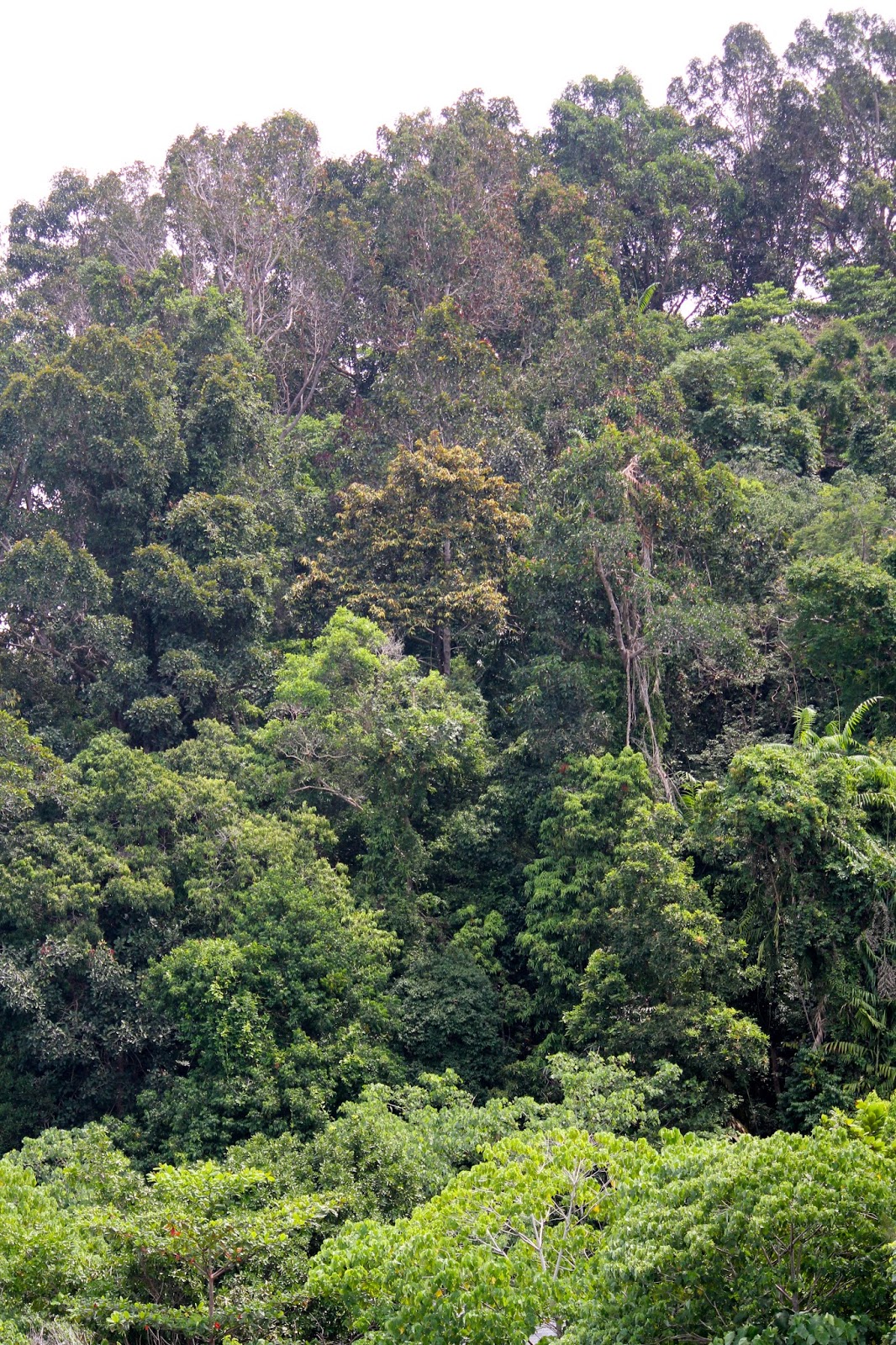
There were all types of vibrant and amazing species of fish in the water . . . and best of all blue STARFISH! I couldn’t wait to go snorkeling, but first, the 2km jungle trek. It was easy to see the different rainforest levels from the boat. The emergents were like prima donnas showing off, the canopy layers and the under story and we trudged through the forest floor. 


As we climbed the steep clayey path Mum pointed out that the roots were mainly on the surface of the forest floor. You all know I’ve done my research on rainforests so I knew they were on top because the soils beneath the floor is infertile so there’s no point for a tree to plunge its roots deep for nutrients and support. Instead the tree roots create a maze just beneath the surface to gobble up the rich humus layered soil. I’ve seen plant adaptions in the Cambodian jungle and I saw more today, like the spiky plants, and of course the climbing lianas searching for sunlight. 

Our guide, “Don”, explained the different types of wood located in the rain forest and how they are used. There is a type of fern has wood that’s used to make the walls of some houses, and when people didn’t have iron nails they used thin lianas, which they dried to use as a strong rope.

We also spied a chameleon which took a while to convince Mum that the twig 20 meters away was a lizard! She had to get her telephoto camera and click the tree and THEN she believed me! (I think she might need stronger glasses! .. or perhaps listen to me!). 

We then  approached the mangroves. I was given a small geography lesson by Mum. I now understand how important the mangroves are, especially as they are important breeding grounds to many species of fish. 


Mum explained that some people don’t realise how important they are and see the mangroves as a waste of space. Botony Bay had a perimeter of mangroves but they built Sydney International Airport there - and destroyed the mangrove ecosystem. The trees that grow in the mangroves have adapted to sea water, by developing a “filter” which clears the salt from the water (all trees need fresh water to live). 

Mangrove tree pods have an amazing adaptation - the pods are not evenly weighted, the end with the roots is heavier. So if the pod falls during high tide, it will slowly rotate and the heaviest part sinks into mud and plants itself there. Lesson in adaptions done. 


I also saw the consequence of people not considering the environment when the high tide dumps rubbish in the mangroves. I've got more to say about mass tourism in my next post! 

We left Gaya island to head for a picnic lunch and snorkeling ... but when we got there .. Mum refused to stay .. I'll tell you more in the next post - yep, mass tourism issue again. 

Friday, 28 June 2013

SYD to SIN to KL to KK

Sydney to Singapore to Kuala Lumpur

The day  flying: Qantas Club breakfast, and a QF flight for a change with inflight entertainment. It was going to be fun! It was, until the first movie (Goddess) finished and Mum gave me a pad with questions on it! Geography and maths lessons followed me, but Mum did say “you’re missing two days of school, so you should do SOME work”! 

Here are the questions, and my answers (I had to read the Qantas magazine, look out the window, and watch the flight path video)
  1. What time did we depart Sydney? 9.45am
  2. How long is the flight to Singapore? 7:35 hours
  3. Singapore is 2 hours behind Sydney, so what will be the local time when we land into Singapore? 17:20 (5.20pm)
  4. We are departing Singapore at 19:10 for Kuala Lumpur. The flight is about 55 minutes. What will the time be in Sydney when we land at KL? 22:05 (10.05pm).
  5. What does “ETA” mean? Estimated Time of Arrival.
  6. How long will it take us to fly from Sydney to KL? 12 hours & 20 minutes.
  7. What direction are we flying from Sydney to Kuala Lumpur? NW
  8. How many degrees is Kuala Lumpur from Sydney? about 270 degrees
  9. We are on an A330-300 plane. How many of these planes are in the Qantas fleet?
  10. What is the cruising speed of the A330-300? 890 km/hour
  11. How far is it from Sydney to Singapore? 6,289 km
  12. How long should it take to get from Sydney to Singapore? (working it out from questions 10 and 11 - you can use a calculator. Time = distance/speed, so Time = 6,289/890, so time is 7:06 hours.
  13. Why does the flight path say it will take 7:35 hours? Because the plane doesn’t go at the cruising speed when it’s going up or descending. 
So, I did geography skills which Mum says I will have to do in Year 7, and Maths, which I have done. 
OH, and I also had to do more WEATHER observations, which I had do for homework a few weeks ago. 


The clouds became more interesting when we were over Java, and Borneo and the South Sea (which is what Vietnam calls the South China Sea). Mainly because we were flying through the afternoon clouds which had evaporated from the equator heat. We flew through puffy cumulous clouds, we saw the high streaky cirrus clouds, and the stratus clouds were always around. BUT I loved dodging the cumulonimbus clouds, or actually I don’t think we did and it was fun watching Mum “not enjoying” the turbulence!


Descending into Singapore haze

I certainly now, understand the smoke haze Singapore was complaining about, and, how Indonesia is accusing them of acting like a child, although some Malaysians aren’t too happy either. Our decent into Singapore was really strange as we couldn’t see anything accept a thick layer of smoke blanketing Singapore. Mum and I were lucky enough to see one boat below! I was starting to wonder how the pilot was going to land the plane, but then again I know he would be listening to Air Traffic Control and a radar and a navigation system.


It was unusual not heading to the Tanglin Club after our flight which is our usual routine! In fact it would have been better, can anyone guess why? Correct, more MATHS! You see Mum had ANOTHER LESSON for me -currency exchange! She had to change 200 USD into Ringet and lucky me got to convert it. I learned that 1USD = 3 Ringet, so 200 USD = 600 Ringet! Mind you, it was easier than converting Kip because 7000 kip = 1 USD.

B & B - in KL - breakfast
It was dark when we descended into KL’s international airport so we couldn’t see much, however it didn’t matter  the airport is far from the city and you could barely see any lights and I discovered this morning that there are NO lights because oil palm plantations surround the airport. Mum and I were both tired, and the Bed & Breakfast house was further from the airport than expected . . . like 25 minutes, not 5, but I still had time to get my Nasi Lamak (dinner) which I ate in the taxi. 


 The alarm went off at 6.30am this morning and after I had some honey stars (I haven’t had them since Saigon) we went to the bus station to get a coach to the airport for our flight to KK. When we took off from KL I saw SOOOO many oil palm plantations, and these were near KL, no where near Sumatra where the fires are burning to make way for oil palms. 

Oil palm plantations


I can certainly see the difference being in a Muslim country. Mum taught be the difference between the Burqa (when women have their eyes covered by a mesh), the Niqab (when only their eyes are showing) and the Hijab when their face is showing, and sometimes women just wear a head scarf. There were so many many black cloaked women in the airports. I don’t know what age a girl is when she has to wear it, because I saw lots of girls my age who were dressed just like me - except I didn’t see anyone wearing hiking boots. (does anyone know?). 

We’re staying in a hotel about 45 mins from KK city, which is great because all we can see from the ground floor hotel room terrace is grass, tamarind trees, the South Sea and a warning saying “Beware jellyfish” !! We didn’t go swimming in the sea today!


The view from our terrace room


Ready for a swim


Friday, 21 June 2013

BORNEO COUNTDOWN

BORNEO COUNTDOWN


In 5 days Mum and I are leaving for Borneo, in Sabah state of East Malaysia. It's not far from Vietnam, about 1000km SE from HCMC

Check out the maps below. 

We are flying from Singapore to KL (that's NW), then to KK (Kota Kinabalu - that's NEE), and to Sandakan later (East from KK).Then we will travel in the direction of 235 degrees to Singapore.

Mum has made a research blog for me.

 http://apsararesearch.blogspot.com.au

So far I've got information on:

  • location
  • rainforests - climate, layers, biodiversity, adaptations
  • destruction of rainforests - logging and fires & palm oil plantations
  • orang utans. 

Mum still has to get information on WW2 POWs, because we're following the "death march" of the Aussie POWs near Sandakan.