Monday, 1 July 2013

DEATH MARCH Trail Part 2

I wish I’d done this walk before I handed in my Microorganisms last week because we saw lots of mushrooms. When I said lots I sure meant it. We also saw different plant species that are endemic to Borneo, including wild ginger which is not edible. We also saw oil palms!


I learned about Allan Quailey on the video at the Ranau Australian memorial. The track we took is exactly where he lost the will and strength to continue. His mates urged him on because they knew if he didn’t continue the Japanese would kill him.  But it made no difference, Allan Quailey knew this too.  He slumped against a tree and he was bayonetted. At the end of the Ranau track there is a memorial for him, on Quailey’s Hill. 


I cant even imagine what it was like walking the track. They were like skeletons, they had malaria, scabies, lice and dysentery, and other horrible diseases. They had no muscles, and the Japanese had tortured them inhumanely, AND they didn’t know the Japanese were losing the war, which finished a few months after the “death march”. I knew that I had lunch waiting at the end, and a van to take us back to a hot shower, air con and internet! The walk gave me a TINY understanding of what they went through but only because I was thinking what it would have been like for the POWs. 

It was an AMAZING experience. 


DEATH MARCH TRAIL Part 1

DEATH MARCH track

We walked 5 hours on just part of the Sandakan to Ranau POW track which was known as the death march no one survived. If any POW was too sick, injured or just too exhausted they were killed on the track by the Japanese. I found out that the local Sabahans built the track under the orders of the Japanese. The locals did not support the Japanese and thought the track was for them, so they deliberately routed it away from any villages and across the most difficult, impossible terrain. 

We saw the difficult route today. In fact there were different terrains we crossed or rather crashed through or up or over. The jungle was so thick that the guide had to use his machete to carve a path, cutting down the trees, bamboo, lianas and well, everything, to get us through parts of it. We walked through dark, humid, wet rainforests, over creeks and moss, slushed through damp humus, crushed the leaf litter and didn’t hold on to the rattan plant with its nail spikes. 

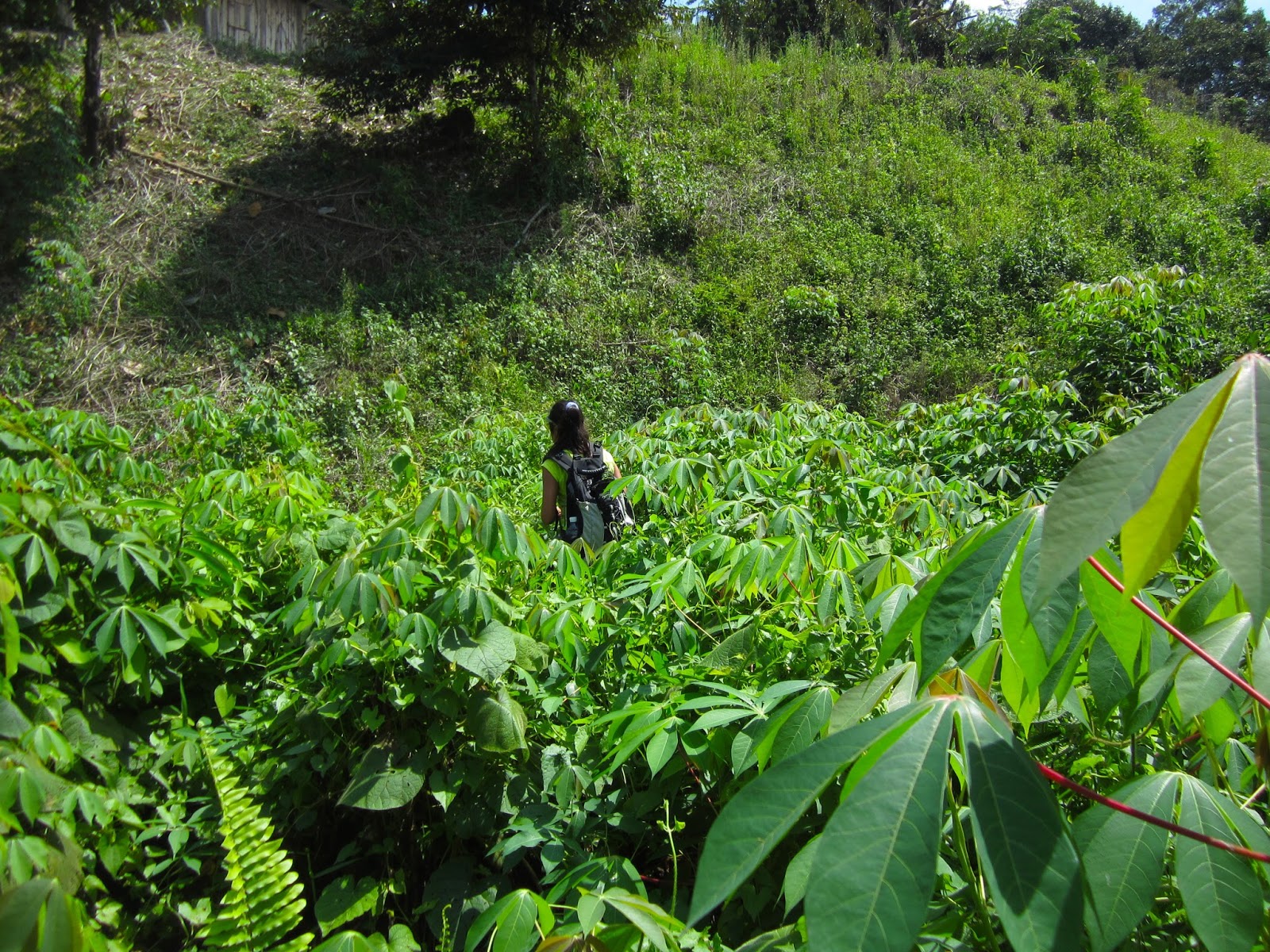
We walked through temperate forests, grasses, along local tracks, across bridges and sometimes Mum couldn’t find me under the grassy ferns. 

roots and lianas tried to capture us
Every time we came out of the rainforest we had to scan our boots for leeches because they tried to squirm their way in. It was actually quite scary seeing them move at such a rapid pace! Insect repellant fumes surrounded us a couple of times as Mum and I made sure it covered us . . . and our shoes! Then there were the wasps! Mum got bitten on the arm, and they apparently hurt a LOT. I won’t go into the details, we just went on. The bugs and spiders and flying creatures came on the walk with us. I kept imagining what it would have been like for the POWs who were so frail, weak, sick, injured and were wearing only loin clothes, some had no shoes, and water wasn’t available like we had. 


I think the leeches were in here


I got my camera out when we were on the grass.


we had to walk through this


the rattan nails!

the path is ahead

and in through here

this one was easier but slippery!

Mum couldn't find me a minute after the photo was taken!

NOW .. this was FUN!


RANAU - tea plantations

Ranau is not far from Mount Kinabalu. We stayed in a cabin last night at a tea plantation. These are the views from breakfast this morning. 

I learned about how tea is processed from the leaf to the bag. 


Tea plants 
tea plants - close up


Sunday, 30 June 2013

POW MEMORIAL RANAU

POWs - RANAU

We went to the Ranau Memorial for the Australian, New Zealand and British POWS who perished in the camps and on the “death march” between Sandakan and Ranau.  99.7% of the Aussie POWs died - only 7 survived. We’re walking about 5 hours of the trek tomorrow, but we will have hiking boots, full stomachs, sun screen, insect repellent, sun glasses, and we won’t have scabies, lice, malaria or malnutrition. 

There were also some amazing paintings depicting the hardship of the POWs.


When Singapore fell to the Japanese, all the Australians, NZ, British and Indian soldiers were captured and put in Changi prison. 

The Japanese wanted to build a system to transport supplies easily through Asia, for example, they wanted a railway to Burma and an airfield in Borneo. I’ve been the Kanchanaburi near the River Kwai and saw Hellfire pass where the Aussies were sent from Changi to work 24 hours a day in terrible condition to built the Thai Burma railway. 

We saw a video today, and it talked about how Australians know about that railway and the Kokoda trail, but not many know about the atrocities in North Borneo - at Sandakan. The POWs sent to North Borneo from Changi went to build a runway at Sandakan. It didn’t happen in the end, because both the Australians and the local Sabahans sabotaged a lot of the construction. 


The Japanese were very very cruel to the POWS. They tortured them horribly, and didn’t given them enough food & water, shelter or clothing. These are basic needs. The Japanese army were inhumane. They were especially cruel when they knew they were losing the war and would have to surrender soon. The instruction from the top Japanese generals was for the POWs to die - and most did, over 2000. 


The Australian memorial garden is beautiful, and the museum has lots of framed photos and messages from families of the POWs. 


There was one item that was special I thought. A big rectangular glass box with 2428 origami paper cranes and a message saying it was donated by the Ho Nishigori family, Tokyo 2011. I know what paper cranes mean in Asia:)

Mum’s reading a book by one of the Sandakan camp survivors, Billy Young and she’s been telling me bits about it. I signed the Visitors book.   


KINABALU PARK

KINABALU PARK

Our first stop, well after a can of milo and Mum’s thick black coffee with the locals, was Kinabalu Park.

UNESCO declared it as a World Heritage site in 2000. I was at 2 other World Heritage sites in April: Angkor Wat temples and Luang Prabang. 

It’s one of the few places in the world where you can walk 10 km and pass through tropical lowland rainforest, montane temperate forest and alpine meadow ecocsystems. This is why there are more than 5000 plant species in the park because there are different ecosystems and huge altitude range and climate from hot humid to freezing alpine. 


We didn’t see 5000 species of plants, although we saw a LOT. The usual epiphytes, lianas and ferns, but I did learn about some of their different types. We saw the world’s tiniest orchid and one worth USD10,000 because it’s so rare. 


The signs around the park were different colours symbolising which plants were endemic (native to the place), common, or medicinal. 


Mum & I wondered how people found out which flowers or berries or leaves were medicinal or edible and I guess it was trial and error. So, some people might not have done too well with the errors! We saw a kerosene tree - if you squeeze the seed it will keep a fire alight. 


Don the guide kept telling us the long species names of plants, like Nepenthes X. Kinabaluensis and Nepenthes Villosa, for different types of Pitcher plants. How are we meant to remember these? (BTW - I copied these from a book). AND he kept telling us numbers, like how many different types of rattan vines there are, or how many types of orchids there are. What is the point of telling us that when we don’t know how many there are in the world. He should have used percentages, like more than 50% or about 20% etc. 


USD10,000 orchid

The Pitcher plant is amazing though. I’ve seen it on Animal Planet & Nat Geo but I didn’t realise how huge some of them are.  


Spencer St John worked for the British Crown in the mid 19 century, and in in 1858 he wrote that he found a gigantic pitcher plant which held 4 liters of water and one that contained a dead rat. Pitcher plants are carnivorous - obviously with dead rat decomposing in it.